Love generations – interview with Santanu Bhattacharya
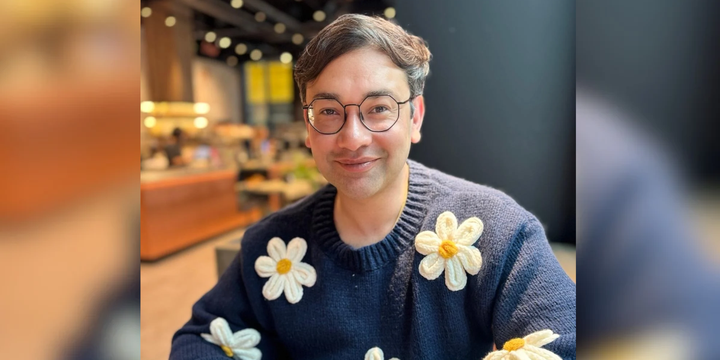
Enrich, educate, engage – and a dollop of hot sex. That’s what Santanu Bhattacharya wants from literature. In Deviants, the follow-up to his award-winning debut One Small Voice (2023), the London-based Indian author follows three gay men across three generations. A conversation about family secrets and queer loneliness
How much of Deviants is fictional and how much came from research? It’s a bit of everything. Part of it comes from family history. I had an uncle who was gay, but we didn‘t really know much about his life. That became my starting point: trying to reimagine what his life might have been. I used some key events as milestones for the story, but everything in between had to be filled in because we didn’t know much. Some of it was research, but not a lot. When I’m writing fiction, I don’t believe in a lot of research because I feel it can restrict my imagination. But I did have conversations. I spoke with my mum and other family members, as well as older gay people, to understand what their lives had been like – where they went, where they congregated, etc.
Your three characters live very different lives and face very different struggles. Despite those generational differences, what do they share at their core? Very good question. I think what they share is something common to queer people across the world, regardless of age or geography: a sense of being different, an awareness of that difference and the knowledge that society is still not fully prepared to accept them as they are. No matter how liberal your world might be, how privileged you are or how much technology you have, there is still a sense that a fight has to be fought at every step. And with that comes a certain loneliness. You can even be plugged into a big queer community and still be reminded, every day and at every level, that you are different. We are constantly negotiating whether to fight our way into fitting in, or choose to stand out. That is something all my characters share, and that struggle can get quite lonely at times.
At a time of growing conflict and discrimination – and when many people, including here in Berlin, are feeling increasingly isolated – can queer literature still create solidarity and bring people together? I think we’re in a very interesting moment. On the one hand, there is this huge conservative pushback. On the other hand, I think our understanding of what it means to be queer is probably broader than ever. It is no longer only about gender or sexuality. Queerness is becoming a way of describing almost anything that’s an alternative way of life.
"Queerness is becoming a way of describing almost anything that’s an alternative way of life."
What do you hope readers in Berlin will take away from Deviants? I always say that good literature should do three things – the three Es: enrich, educate and engage. Enrich because you should come away from reading feeling like you’ve gained something – an understanding of a different world, or perhaps the experience of recognizing a part of yourself in these characters. Educate because this is maybe something you did not know before. Deviants talks about India’s legal landscape and the journey towards decriminalization of homosexuality, which wasn’t a straightforward process: homosexuality was decriminalized, then criminalized again, and finally decriminalized once more. And finally, it should engage you. Ultimately, you just want to tell a good story. You want characters people will remember. You want to have a good laugh from time to time. You want some hot sex. Hopefully, the book gives people that wholesome experience of what it means to enter a story.
Folge uns auf Instagram
#English#Interview#literature